
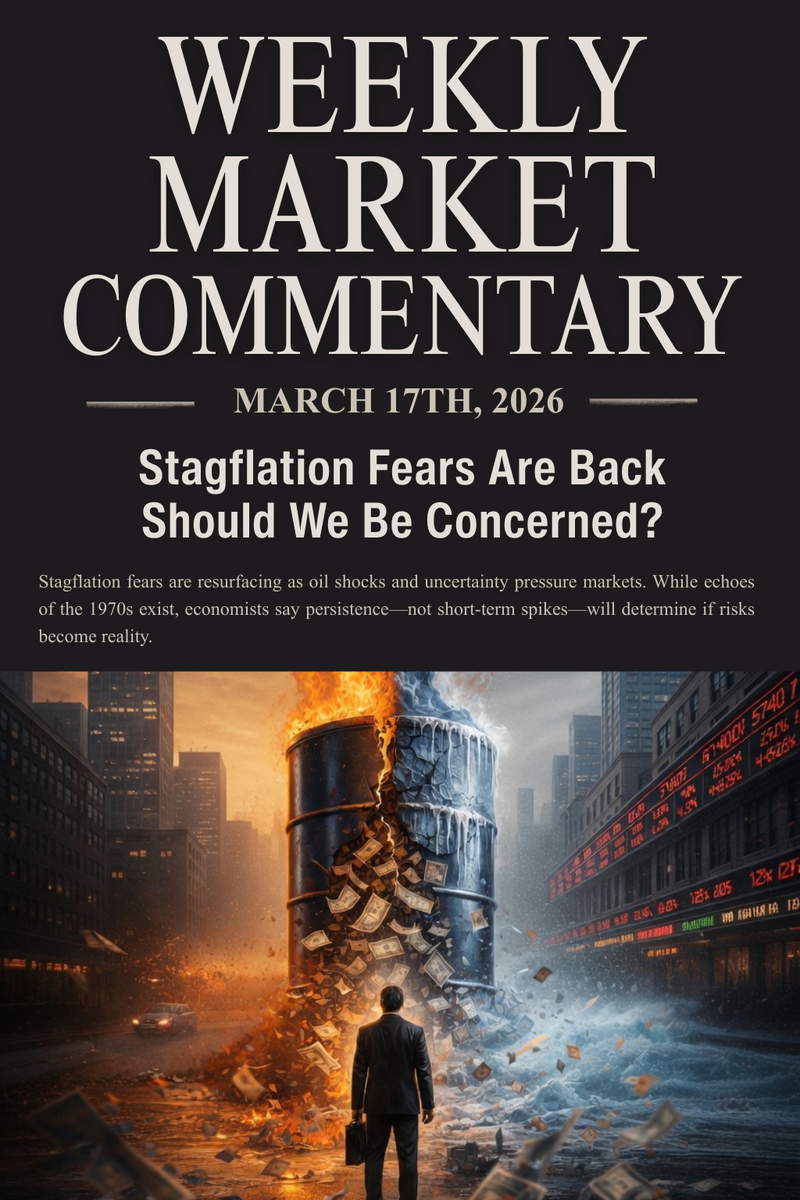
Stagflation Fears Are Back—Should We Be Concerned?
Over the past few weeks, one economic term has been making a noticeable comeback: stagflation. It’s a troubling combination of persistent inflation, slow economic growth, and rising unemployment—a scenario that poses serious challenges for policymakers and investors alike.
The last time the United States faced stagflation was during the 1970s, a period many economists still reference today. What makes stagflation particularly difficult is that the usual tools to fight inflation or stimulate growth often conflict with one another, making it harder to resolve.
Oil Shocks and Economic Fallout
The stagflation of the 1970s didn’t happen overnight. It was largely fueled by major oil supply disruptions when OPEC significantly reduced production and exports. This led to sharp increases in energy prices, which rippled across the economy.
As costs surged, businesses and consumers felt the pressure. Inflation climbed rapidly, yet instead of cooling during the economic slowdown—as it typically does—it continued rising. By the end of the decade, inflation had reached around 9% annually, even as economic growth stalled and unemployment increased.
The Painful Path to Recovery
Addressing stagflation proved incredibly difficult. Traditional policy responses failed to deliver meaningful results. It wasn’t until Paul Volcker, then Chair of the Federal Reserve, took aggressive action that inflation was brought under control.
Interest rates were pushed to historic highs—reaching nearly 20%—which ultimately slowed inflation but came at a steep cost. Borrowing became extremely expensive, mortgage rates soared, and unemployment climbed above 10%. While these measures were unpopular, they eventually succeeded in stabilizing prices and restoring economic balance.
Are We Facing Stagflation Again?
More recently, fluctuations in oil prices and ongoing geopolitical tensions have sparked renewed discussions about whether stagflation could return.
While some economists see parallels, many believe the key factor is duration. Short-term disruptions may create temporary inflationary pressure, but they are less likely to trigger sustained stagflation unless they persist over time.
That said, markets have already shown signs of unease. Stock indexes have pulled back, while longer-term Treasury yields have moved higher—reflecting investor uncertainty about the economic outlook.
Data as of 03/13/2026 | 1-Week | Y-T-D | 1-Year | 3-Year | 5-Year | 10-Year |
Standard & Poor’s 500 Index | -1.6% | -3.1% | 20.1% | 19.8% | 10.8% | 12.6% |
Dow Jones Global ex-U.S. Index | -2.2 | 1.8 | 24.4 | 13.9 | 4.6 | 6.2 |
10-year Treasury Note (yield only) | 4.3 | N/A | 4.3 | 3.5 | 1.6 | 2.0 |
Gold (per ounce) | -1.3 | 17.5 | 68.9 | 38.2 | 24.1 | 15.1 |
Bloomberg Commodity Index | 2.6 | 23.0 | 28.6 | 8.7 | 9.4 | 5.4 |
S&P 500, Dow Jones Global ex-US, Gold, and Bloomberg Commodity Index returns exclude reinvested dividends (gold does not pay a dividend) and the three-, five-, and 10-year returns are annualized; and the 10-year Treasury Note is simply the yield at the close of the day on each of the historical time periods. Sources: Yahoo! Finance; MarketWatch; djindexes.com; U.S. Treasury; London Bullion Market Association. Past performance is no guarantee of future results. Indices are unmanaged and cannot be invested in directly. N/A means not applicable.
Why Does Market Volatility Feel So Unsettling?
If you’ve ever been caught in a sudden gust of wind on a city street, you know how disorienting it can feel. Dust and debris swirl around, making it difficult to see clearly or move forward. But if you pause and wait, the storm eventually passes.
That’s a lot like what investors experience during periods of market volatility.
Lately, markets have been driven by a wave of uncertainty—ranging from geopolitical conflicts and economic concerns to rapid advancements in artificial intelligence and shifting trade policies. These factors can create sharp, unpredictable movements in asset prices.
While volatility can feel uncomfortable, it’s also a normal part of investing.
Test Your Investing Mindset
1. When markets are fluctuating and anxiety is high, what’s most valuable?
A) Constantly checking financial news
B) Following bold market predictions
C) Sticking to a financial plan aligned with your goals
D) Listening to others’ success stories
2. Investors sometimes overreact to recent events, making short-term decisions that hurt long-term outcomes. What is this called?
A) Hindsight bias
B) Recency bias
C) Overconfidence
D) Herd behavior
3. If your long-term goals haven’t changed, what’s the best course of action during volatility?
A) Exit the market entirely
B) Monitor your portfolio constantly
C) Consult a financial professional before making decisions
D) Try to time market highs and lows
4. Why is diversification important in a portfolio?
A) It helps manage risk
B) It guarantees higher returns
C) It prevents all losses
D) It ensures market outperformance
Key Takeaways for Investors
Market volatility is nothing new. Major indexes like the S&P 500 have experienced downturns many times before—and historically, they’ve recovered and continued to grow over the long term.
The most effective approach during uncertain times is to:
Stay focused on your long-term financial goals
Avoid emotional, short-term decisions
Maintain a well-diversified portfolio
Seek guidance when needed
--------------------------------------------------------------------------------------------
Answers
C – A solid financial plan helps keep you grounded during uncertainty.
B – Recency bias leads investors to overemphasize recent events.
C – Thoughtful decisions, often with professional guidance, are key.
A – Diversification is designed to help manage risk—not eliminate it.
--------------------------------------------------------------------------------------------
Weekly Focus – Think About It
“The four most dangerous words in investing are 'this time it’s different.'"
— Sir John Templeton